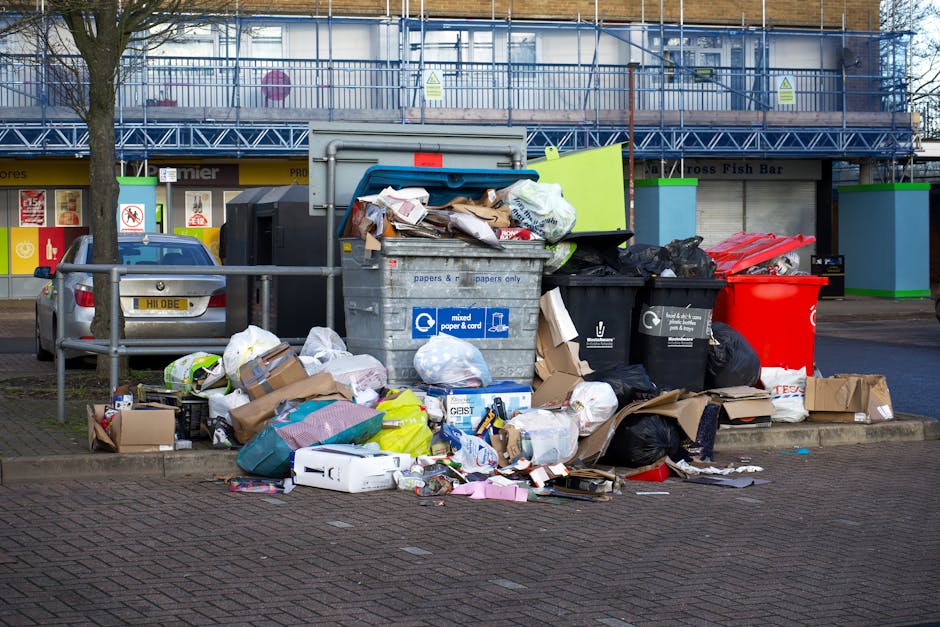
Earlscourt SW5 guide to rubbish collection Earls Court Road

If you live or work around Earls Court Road, rubbish collection can feel oddly complicated for something so ordinary. One week it is a broken wardrobe from a flat move, the next it is builder's rubble outside a shop, and suddenly you are trying to work out what can go out, when it can go out, and who is actually responsible. This Earlscourt SW5 guide to rubbish collection Earls Court Road brings the whole thing down to earth. It explains how local waste collection works, what to do when the usual routine is not enough, and how to clear waste without wasting time, money, or patience.
It is written for people who want practical answers, not fluff. Whether you are dealing with household rubbish, furniture, garden waste, or trade waste, the aim here is simple: help you make the right call first time.
For readers who need a broader overview of disposal options, the site's main waste removal service and recycling and sustainability approach are useful starting points.
Why Earlscourt SW5 guide to rubbish collection Earls Court Road Matters
Earls Court Road is busy, tightly packed, and full of the sort of mixed-use buildings that make rubbish collection a little more awkward than it looks from the outside. You have flats above shops, shared entrances, limited kerb space, side streets with tight access, and people trying to get on with their day. In that setting, even a small pile of waste can become a real nuisance very quickly.
The reason this matters is not just tidiness. Poor rubbish handling can lead to blocked pavements, smells, pests, complaints from neighbours, and avoidable delays. If a collection is badly timed, or the wrong waste is put out, the whole process becomes more stressful than it should be. Truth be told, most people only think about it when the bins are full or the skip is already blocking half the road.
There is also a decision-making side to it. Sometimes the local household collection is enough. Sometimes you need a one-off clearance, a bulky item pickup, or a more structured removal for business premises. Knowing the difference saves a lot of faffing about. And on a road like Earls Court Road, where access and timing can matter almost as much as the waste itself, that knowledge is genuinely useful.
Expert summary: the best rubbish collection plan in Earlscourt SW5 is not the one that sounds cheapest on paper; it is the one that fits the site, the waste type, the access, and the timing with the least friction.
Table of Contents
- Why Earlscourt SW5 guide to rubbish collection Earls Court Road Matters
- How Earlscourt SW5 guide to rubbish collection Earls Court Road Works
- Key Benefits and Practical Advantages
- Who This Is For and When It Makes Sense
- Step-by-Step Guidance
- Expert Tips for Better Results
- Common Mistakes to Avoid
- Tools, Resources and Recommendations
- Law, Compliance, Standards, or Best Practice
- Options, Methods, or Comparison Table
- Case Study or Real-World Example
- Practical Checklist
- Conclusion
- Frequently Asked Questions
How Earlscourt SW5 guide to rubbish collection Earls Court Road Works
Rubbish collection in this part of London usually falls into a few broad categories. You may be dealing with regular council-style collection, a one-off removal for bulky waste, or a private clearance arranged for a flat, office, or renovation project. The right route depends on what needs moving, how much there is, and how quickly it needs to go.
In practical terms, the process often looks like this:
- Identify the waste type. Household rubbish, mixed junk, furniture, garden waste, builders' waste, and business waste are not all handled in the same way.
- Check access. Can a vehicle get close? Is there a lift? Are there narrow stairs, parking issues, or timed loading constraints?
- Separate reusable or recyclable items. This helps reduce waste and can make the job cleaner and quicker.
- Choose the collection method. Standard bin collection, bulky item pickup, bagged waste removal, or a dedicated clearance may be the best fit.
- Prepare the items safely. Put waste where it can be collected without blocking entrances or causing damage.
- Confirm what happens next. A good provider should explain what will be taken, how it will be loaded, and what documentation or confirmation you will receive.
If you are clearing a flat, the logistics can be surprisingly different from a house. Stairwells, shared hallways, and timing windows matter. For that kind of job, a dedicated flat clearance service can be far more practical than trying to manage everything on your own.
For heavier domestic jobs, house clearance and home clearance services are often used when a full room, floor, or property needs emptying rather than just one item or bag.
Key Benefits and Practical Advantages
Done properly, rubbish collection around Earls Court Road is less about hauling things away and more about restoring order. That sounds obvious, but it matters. A sensible collection plan can make a property feel usable again in a very short time.
- Less disruption: waste is removed in one go instead of lingering for days or weeks.
- Better access: hallways, entrances, and storage areas become easier to use.
- Lower stress: you are not left wondering whether the waste will be accepted or when it will disappear.
- Cleaner environment: removing rubbish reduces odours, mess, and the risk of unwanted pests.
- More efficient clear-outs: if you are moving, refurbishing, or downsizing, the job moves faster.
- Improved presentation: useful for landlords, agents, shops, and offices that need the place looking decent, quickly.
There is also a quiet financial benefit. A rushed or poorly planned clearance often leads to multiple trips, extra charges, or items being left behind. Better planning usually avoids that. Not glamorous, I know, but it makes a difference.
Who This Is For and When It Makes Sense
This guide is for anyone in Earlscourt SW5 who needs rubbish collected from Earls Court Road or the streets around it, but is not quite sure which option suits the job.
Typical situations include:
- Tenants clearing out after a move
- Landlords preparing a property for the next occupant
- Homeowners dealing with accumulated clutter
- Flat sharers with bulky waste that will not fit the usual bins
- Shops and offices needing regular or one-off waste removal
- Builders or contractors managing rubble, timber, packaging, or old fittings
- People with garages, lofts, or storage spaces that have quietly filled up over time
In our experience, the biggest trigger is usually a deadline. A moving date, end-of-tenancy inspection, trades start date, or family event tends to focus the mind. Suddenly the pile in the corner is no longer "something to deal with later". It is tonight's problem. Happens all the time.
If you are dealing with the aftermath of a renovation, the builders waste clearance page is especially relevant. For ongoing commercial needs, business waste removal is the better route.
Step-by-Step Guidance
If you want the process to go smoothly, keep it simple and systematic. A little preparation usually saves a lot of back-and-forth later.
1. Sort the waste into clear groups
Separate general rubbish, bulky items, recyclable materials, and anything potentially hazardous. You do not need museum-level organisation, just enough to avoid confusion on collection day.
2. Measure the volume roughly
You do not need exact cubic measurements, but a rough sense of how much you have is important. One mattress is one thing. A mattress, wardrobe, broken desk, and ten bags of general waste is another. Be honest about the pile. It helps everyone.
3. Check building access and parking
On Earls Court Road, access is often the part people underestimate. Is there a lift? Is parking tight? Can waste be carried out without disrupting neighbours or blocking the pavement? A clear plan avoids awkwardness later.
4. Decide whether you need a one-off or ongoing service
If the waste is a one-time event, a single clearance may be enough. If it is recurring, a regular arrangement may be more sensible. That is especially true for businesses and managed properties.
5. Prepare the items safely
Bag loose rubbish, flatten cardboard where possible, and make sure sharp or heavy objects are handled responsibly. If furniture needs dismantling, do it in advance only if you can do it safely.
6. Confirm what can and cannot be taken
Not all waste streams are the same. Some items may need specialist handling. If you are unsure, ask before collection day rather than discovering a problem at the kerb.
7. Keep the route clear
This sounds basic, but it is one of the most overlooked steps. A tidy path from the storage area to the exit speeds everything up and lowers the chance of damage.
For furniture-heavy jobs, the dedicated furniture clearance and furniture disposal services can be particularly helpful.
Expert Tips for Better Results
A few small decisions can make rubbish collection far smoother. These are the sorts of details people only notice after a difficult job, which is usually the point.
- Bundle similar items together. It makes loading quicker and reduces the chance of missing something.
- Keep recyclable material separate. Clean cardboard, metal, timber, and reusable furniture are easier to process when not mixed into general waste.
- Protect walls and door frames. On narrow staircases, a blanket or simple edge protection can prevent scuffs and arguments nobody wants.
- Time collections sensibly. Mid-morning often works better than the early rush, especially in busy mixed-use streets.
- Take photos before and after. Handy for landlords, agents, or business records. Also helpful if you are coordinating remotely.
One thing worth saying: do not leave loose bags sitting in a communal hallway "just for a minute". In a shared building, that minute has a funny habit of becoming everyone's problem. Better to keep the waste contained until the moment it is ready to go.
Common Mistakes to Avoid
Most rubbish collection problems are not dramatic. They are small errors that pile up. The good news is they are easy to avoid once you know what to look for.
- Guessing the waste volume. Underestimating leads to delays or extra trips.
- Mixing everything together. This can make sorting harder and may increase disposal complexity.
- Ignoring access issues. A van can only park where it can park. Annoying, but true.
- Leaving fragile items loose. Broken glass, sharp metal, and loose screws cause avoidable hazards.
- Forgetting special items. Mattresses, fridges, electronics, or paint can require separate handling.
- Putting out waste too early. In a busy street, early placement can cause obstruction or complaints.
A surprisingly common mistake is not thinking through timing. If your collection is booked for the afternoon, do not expect the hallway to stay clear all morning. People still need to use the building. That little detail matters more than it sounds.
Tools, Resources and Recommendations
You do not need a van full of gear to manage most rubbish collection jobs, but a few simple tools make the process easier and safer.
Useful basics include:
- Heavy-duty sacks
- Strong gloves
- Tape or cable ties for bundling
- Labels or marker pens for sorting
- A trolley or sack barrow for heavier loads
- Blankets or protective covers for furniture edges
For readers comparing service types, the following pages can help you choose the right route: garage clearance for stored clutter, loft clearance for hard-to-reach items, and office clearance for desks, chairs, and workplace waste.
If you are clearing outdoor waste, the garden clearance page is the most relevant. For general households, a home clearance is often the simplest answer when the waste is mixed and the job is broad.
Law, Compliance, Standards, or Best Practice
Without getting lost in legal jargon, the main point is this: waste should be handled responsibly, and the person arranging collection should be clear about what is being moved. That is especially important if the waste comes from a business, a managed property, or a renovation.
In the UK, waste handling has established expectations around lawful disposal, safe transport, and responsible treatment of recyclable material. You do not need to memorise the technical detail to make a sensible decision, but you should expect a service to be transparent about how waste is managed and to follow proper safety procedures.
Best practice usually means:
- Keeping waste types separated where practical
- Avoiding dangerous mixing of sharp, heavy, or hazardous items
- Making sure collections do not create avoidable obstruction
- Using a provider with clear operational and safety policies
- Choosing recycling where it is realistic and appropriate
Trust is part of compliance here. A provider should be able to explain its approach to safety, payments, and environmental handling in plain English. If you want to read more about that side of things, the site's health and safety policy, insurance and safety, payment and security, and terms and conditions pages are worth a look.
Options, Methods, or Comparison Table
Different waste problems call for different solutions. Here is a simple comparison to help you choose.
| Method | Best for | Strengths | Limitations |
|---|---|---|---|
| Routine collection | Regular household rubbish | Simple and predictable | Not suitable for bulky or unusual loads |
| Bulky item removal | Single large objects or a few large items | Fast and practical | Can be limited by item type and access |
| Dedicated clearance | Mixed loads, flats, refurb jobs, or accumulated waste | Flexible and efficient | Usually needs more planning |
| Business waste arrangement | Offices, shops, and commercial premises | Better suited to ongoing needs | Requires clear scheduling and segregation |
If the waste includes a mix of old furniture, household items, and general clutter, a dedicated clearance is often the cleanest option. If it is mostly waste from a trade job, builders' removal is usually a better fit. Simple, really.
Case Study or Real-World Example
Here is a realistic example from the kind of job people regularly face around Earls Court Road.
A small flat above a commercial unit needed clearing before a tenancy change. The occupants had a broken sofa, a coffee table, several bags of mixed household rubbish, and a few awkward items from a built-in storage cupboard. Nothing enormous, but enough to be inconvenient. The hallway was narrow, the lift was small, and the collection had to fit around daytime foot traffic.
The sensible approach was to sort the items into furniture, general waste, and reusable material before collection day. That meant the team could move quickly, avoid clogging the entrance, and keep the stairwell clear. The job was not complicated, but it would have become one if the waste had been left in random piles. You can picture it: a half-open cupboard, one shoe still under the bed, a faint smell of dust. Classic end-of-tenancy chaos.
The big lesson? In compact London properties, preparation matters more than brute force. A tidy, planned clearance is usually faster, safer, and less stressful for everyone involved.
Practical Checklist
Use this before collection day to keep things moving.
- Identify the waste type clearly
- Estimate the amount as accurately as you can
- Separate furniture, recyclables, and general rubbish
- Check stairs, lifts, parking, and doorway access
- Remove anything you want to keep before the collection starts
- Bag loose waste securely
- Protect walls, floors, and door frames if items are bulky
- Make sure the route to the exit is clear
- Confirm timings and any access notes in advance
- Keep fragile or hazardous items apart unless they have been specifically agreed
It is a small list, but it catches most of the avoidable headaches. And that, in fairness, is what people really want.
Conclusion
Rubbish collection on Earls Court Road is easiest when you treat it as a planning job, not just a lifting job. Once you know what you have, how much there is, and how the building or site works, the rest becomes far more manageable. Whether you are clearing a flat, a shop, a house, or a workspace, the right approach saves time and avoids the usual last-minute scramble.
The main takeaway from this Earlscourt SW5 guide to rubbish collection Earls Court Road is simple: match the collection method to the waste, the access, and the deadline. Do that well and everything else becomes a lot calmer. Not perfect, maybe, but calmer. And sometimes that is enough.
If you are ready to compare options, review service details, or plan your next clearance properly, start with the pages most relevant to your situation and go from there.
Get a free quote today and see how much you can save.
Frequently Asked Questions
What is the best rubbish collection option for a flat on Earls Court Road?
For most flats, the best option is a clearance that accounts for stairs, lifts, shared entrances, and limited loading space. If the items are bulky or mixed, a flat clearance is usually more practical than trying to manage everything through standard collection alone.
Can I put bulky items out with normal rubbish collection?
Usually no, not if they are too large for standard bin services. Bulky items often need a dedicated pickup or a one-off removal. It is worth checking the collection method before leaving furniture outside, because abandoned items can become an access problem very quickly.
What types of waste are commonly collected in Earlscourt SW5?
Common collections include household rubbish, old furniture, garden cuttings, office items, bagged clutter, and builders' waste. The key is to separate the waste type as early as possible so the right method can be chosen.
How do I know whether I need house clearance or waste removal?
If the job involves clearing a property or several rooms, house clearance is often the better fit. If you simply need mixed rubbish or isolated waste taken away, general waste removal may be enough. The scale of the job usually gives you the answer.
Is furniture disposal different from general rubbish collection?
Yes, it often is. Furniture can be bulky, awkward to carry, and sometimes suitable for reuse or separate recycling. A furniture-specific service is usually safer and more efficient than trying to squeeze it into a general waste job.
What should I do before a rubbish collection arrives?
Sort the waste, clear access paths, bag loose items, and remove anything you want to keep. If the property has narrow stairs or a tricky entrance, make that clear in advance. A little preparation goes a long way, honestly.
Do I need to separate recyclable items from general waste?
Where practical, yes. Separating clean recyclable material can help improve the efficiency of the job and reduce unnecessary disposal. It also makes it easier to reuse or recycle items that still have value.
Can offices and shops on Earls Court Road arrange waste collection?
Yes, and many do. Offices and shops often need a more regular arrangement or a one-off clearance depending on stock, refurbishments, or relocation. A business waste removal service is usually the most suitable starting point.
How far in advance should I arrange collection?
As early as possible if you have a deadline, particularly if the job involves access issues or a larger volume of waste. For smaller, straightforward collections, a shorter lead time may be fine, but early planning always helps.
What happens if the waste includes items that are hard to move?
That is where planning matters. Heavy, sharp, or awkward items should be described clearly before collection so the right equipment and handling approach can be used. If items are especially difficult, a dedicated clearance is usually safer than a casual pickup.
Are there safety issues with leaving waste in communal areas?
Yes. Left in a hallway or shared entrance, waste can block access, create a trip hazard, and upset neighbours. It is better to keep everything contained until collection time and move it out as efficiently as possible.
How do I choose between furniture clearance, loft clearance, and garage clearance?
Choose by location and access. Loft clearance is best for items stored overhead or in hard-to-reach spaces, garage clearance suits stored clutter and mixed household items, and furniture clearance is ideal when the main issue is large pieces rather than general junk. Matching the service to the space makes the job much easier.
Where can I learn more about the company and its standards?
If you want background on the team and the way it works, the about us page is a sensible place to start. For practical questions about payments, safety, or how waste is handled, the policy pages linked above are useful too.
What is the most common mistake people make with rubbish collection?
Underestimating the amount of waste. That single mistake creates most of the stress, because it affects access, timing, vehicle size, and the number of trips needed. A slightly cautious estimate is usually better than an optimistic guess.